Fund/Build/Scale
After working for years in early-stage startups and as a journalist, here are three hard truths I’ve learned:
1. Success in Silicon Valley hinges on connections, hard work and luck.
2. Startups often fail because founders lack fundamental business knowledge.
3. Real, actionable advice comes from those who’ve actually done it.
There’s no such thing as “founder DNA.” If you’re willing to take on risk and invest years of your life in something that has maybe a 10% chance of paying off — less if you’re a woman or person of color — you can be a startup founder.
Here’s why I founded Fund/Build/Scale:
1. To help founders make fewer mistakes.
2. To share successful strategies that can accelerate your go-to-market journey.
3. To inspire more people to see themselves as potential founders. There’s a lot of overlooked talent out there, and we are missing out.
This podcast is for anyone who’s interested in learning the basic skills required to launch a startup, secure initial funding and transform an idea into a sustainable business.
I’m talking to guests about everything: finding a co-founder, conducting customer discovery, recruiting early employees, developing a PLG strategy, fundraising when you’re outside a major tech hub — all of it.
Interested? Subscribe to Fund/Build/Scale on all major platforms and follow the podcast on LinkedIn to get articles, excerpts, transcripts and more.
Fund/Build/Scale is a production of Truth and Soul Media LLC.







Episodes
Sep 13, 2024
Sep 13, 2024
43 min
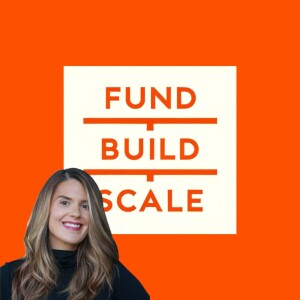
Jenna Birch is the founder of SISU, a PR firm that serves early-stage startups and VCs. She’s also a partner at Kaya Ventures.
We talked about how to recognize when it’s time to engage PR services, the importance of a founder’s personal branding and the path that led her from journalism into venture-backed tech.
She also shared her methodologies for assessing clients, setting realistic expectations, and creating impactful media strategies.
There are a lot of misconceptions around PR and comms, so I was glad to get her perspective on earned media, personal branding for founders, and tips for navigating the earlier stages of a startup's lifecycle with optimal PR strategies.
“PR is not meant to make up for a lack of something in your business, it can't fix the thing that you really need to fix, for instance, finding product market fit,” she said.
“PR is not the gateway to do that. You have to have that figured out before you get PR.”
We also talked about how to interview a comms firm, her ballpark estimates for monthly fees, and which red flags to look for when a PR professional wants to rep you.
“You want to learn everything you can. So I'd also just ask about the transparency and how they're going to guide you through, because I think having a look behind the curtain — having someone that's willing to give you that look — is important.”
43:46 minutes
EPISODE BREAKDOWN
(1:55) “SISU is a very good startup word. It means ‘enduring grit.’”
(4:14) Her transition from journalism into being a comms professional/VC.
(7:26) Inside the process Jenna uses to assess potential clients.
(8:55) “PR is not meant to make up for a lack of something in your business.”
(12:08) SISU’s onboarding process: “I like to craft things in three-month sprints.”
(14:47) “Ultimately, you're the steward of your company's story. So I need you to be involved in that process.”
(19:14) How founders can identify/leverage news hooks and trends.
(22:10) When it comes to thought leadership, “most founders and most investors are not immediately good at that.”
(24:59) Why she thinks LinkedIn is more valuable than Twitter/X for business leaders.
(27:32) Which signals and metrics indicate you should hire outside PR help?
(31:16) The framework she uses to decide whether your startup is ready to hire her.
(32:27) “Anyone that promises you press is probably not the right partner for you.”
(35:05) Jenna ballparks a monthly cost for professional PR services.
(38:10) How she became a partner at Kaya Ventures/how to pitch her.
LINKS
Jenna Birch, founder, SISU
SISU
Kaya Ventures
NFX
Paid vs. Owned vs. Earned Media: What’s the Difference? (Harvard Business School)
Subscribe to Fund/Build/Scale
📓Substack: https://fundbuildscale.substack.com
🎧 Apple Podcasts: https://podcasts.apple.com/us/podcast/fund-build-scale/id1719488387
🎧 Spotify: https://open.spotify.com/show/0EbC8PTUSfpZ4USPC9ErnN
Thanks for listening!
– Walter.

Sep 12, 2024
Sep 12, 2024
42 min
Before Sri Chandrasekar became managing partner at Point72 Ventures, he was a Senior Vice President at In-Q-Tel, the non-profit VC firm that invests in startups on behalf of the CIA and other national intelligence agencies.
That work cultivated his interest in AI and ML a decade ago, which led hedge fund Point72 to recruit him to join its then-new venture arm in 2017. Fast-forward to 2024, Sri takes around 300 first-call meetings with founders each year.
While we had an extended discussion about his investment thesis and the types of opportunities he's targeting, he also offered key insights into the current early-stage fundraising environment and spoke about the growing difficulty for startups seeking Series A funding, compared to the relative ease of raising seed rounds.
AI-related startups need more capital than ever to launch a MVP, leading to larger seed rounds without increasing dilution for founders. However, this drives up valuations, and when startups reach the Series A stage, investors hesitate to pay high prices for companies with limited traction.
“I think a lot of seed-stage founders are going to see this in the next year or two,” he said. “They're going to raise a Series A and they're going to be not up rounds, they'll be flat rounds.”
42:21 minutes
Episode breakdown
(1:45) “In-Q-Tel is the best place in the world to learn about venture.”
(3:53) “Machine learning and AI is gonna be the most transformative force to our economy since the steam engine.”
(8:55) “I think we're six to twelve months away from the trough of disillusionment.”
(11:52) “It's easier than ever to build a prototype of anything… and the hardest that's ever been, in my opinion, to raise a Series A.”
(15:27) The differences between working with technical and non-technical founders
(19:23) “I'm starting to think that Herman Miller Aeron chairs probably hold their value longer than GPUs.”
(21:16) “Returns are getting compressed, and something's got to give, right?”
(24:21) What real repeatability actually looks like.
(27:33) “It's really important to not get ahead of yourself in terms of marketing and branding until you have clarity around, ‘do I have product-market-fit?’”
(31:26) Sri breaks down the “triple-triple-double-double-double” growth framework.
(34:39) Advice for founders who need help de-risking themselves.
(37:43) “I don’t know what the point of being in stealth is.”
(40:47) What would Sri ask an early-stage CEO if he were interviewing for a job?
Links
Sri Chandrasekar
Point72 Ventures
Subscribe to Fund/Build/Scale
📓Substack: https://fundbuildscale.substack.com
🎧 Apple Podcasts: https://podcasts.apple.com/us/podcast/fund-build-scale/id1719488387
🎧 Spotify: https://open.spotify.com/show/0EbC8PTUSfpZ4USPC9ErnN
Thanks for listening!
– Walter.

Sep 5, 2024
Sep 5, 2024
25 min
Nicholas Thorne is a partner at prehype, a venture development firm that helps large companies create startups by acting as an incubator.
He's also the founder of Audos, an AI co-pilot designed to assist entrepreneurs in conducting customer interviews, creating slide decks, and potentially investing in their ideas.
According to Nicholas, Audos can even write code and identify freelancers, functioning as a virtual technical product manager. I interviewed him to explore how this co-pilot supports entrepreneurs, particularly those in the “conceptual stage,” to locate — and eventually exploit — what he calls ‘founder-customer fit.’
He outlined the ideal user profiles for Audos, which range from small business owners to corporate innovators and also explained how Audos leverages AI to tackle various tasks for entrepreneurs and discussed the investment opportunities he's pursuing.
Finally, Nicholas shared some of the resources he's using to deepen his understanding of AI.
Runtime: 25:39
Episode breakdown
(1:31) How Audos works, and who's using it.
(4:33) "It's just about trying to do the best thing you can to create more information with which you can make progress."
(9:12) Audos' ideal customer is a "conceptual stage" founder.
(11:40) Helping entrepreneurs "find and then nurture, and over time, exploit what we call 'founder-customer fit.'"
(15:36) Using AI to shorten the customer discovery process and speed time to market
(19:30) "I think you would probably consider it a family or suite of GPTs that are all trained in extremely specific jobs."
(22:00) What kinds of investment opportunities he’s looking for (and how to reach him)
(24:12) How Nicholas fills in the gaps in his AI knowledge
Links
Nicholas Thorne, partner, prehypenicholas@prehype.com
prehype
Audos
Ethan Mollick, Ralph J. Roberts Distinguished Faculty Scholar, Associate Professor of Management, Co-Director, Generative AI Labs at Wharton, Rowan FellowOne Useful Thing (Substack)
@emollick
Dan Shipper, co-founder/CEO, Every@danshipper

Aug 28, 2024
Aug 28, 2024
31 min
I met Fortune Senior Finance Reporter Allie Garfinkle in February 2024 at an event for comms professionals.
She had just taken over the Term Sheet daily deals newsletter covering startups, venture capital, M&A, trends and pretty much anything tech-related.
When news broke right after our panel that Reddit was filing to go public, she didn’t have a desk or a chair, so she grabbed her laptop, sat on the floor with her back to the wall and began drafting her next column.
She wasn’t stressed out — she seemed excited and laser-focused.
Term Sheet comes out five times each week which means she’s up and reviewing reader tips between 4am and 6am. “I actually write every day because I want it to feel urgent. It's sort of this odd equivalent of being journalistically naked,” she said.
A lot of tech reporters use their platforms to make predictions, pick winners and embroider their opinions, but Allie tends to play it right down the middle.
“The thing that I probably excel at is sort of being somewhere between neither being a cheerleader nor being an incredibly harsh critic,” she said. “I actually try to approach every person in front of me on their terms, like, “okay, who are you?”
Episode breakdown
(3:49) “I started at Fortune in January. New year, new job. I'd actually never written a daily newsletter before, ever.”
(7:00) “I think there are great hot takers in this business. But I don't think I will ever be one of them.”
(9:27) “What's the bar for including things? I try to put myself in the position of the readers.”
(11:57) “The Reddit IPO — actually the day we met — I had another story in the can. I recall this.”
(14:40) “There's a certain kind of conventional story of success I find incredibly boring.”
(16:53) “There's sometimes stories where I don't know if I'm the right person.”
(17:13) Why Elon Musk just isn’t that interesting to write about.
(19:07) How Allie really feels about writing tech trend pieces.
(21:44) She explains how Stephen Sondheim’s rules for songwriting also apply to tech reporting.
(25:04) Allie’s advice for early-stage founders who are fundraising in 2024.
(29:04) “I don't want to work with jerks. This is something that I've had to learn the hard way over time.”
Links
Allie Garfinkle, Senior Finance Reporter, Fortunealexandra.garfinkle@fortune.com
Fortune articles by Allie GarfinkleReddit’s S-1 paints the picture of a company with a complicated past, present, and future
Poor Charlie’s Almanack: The Essential Wit and Wisdom of Charles T. Munger
Thanks for listening!
– Walter.
fundbuildscale@gmail.com

Aug 25, 2024
Aug 25, 2024
42 min
Before Igor Jablokov was CEO and founder of Pryon, he worked with Apple on a prototype of Siri. He also founded a speech recognition company that Amazon acquired to develop its Alexa AI and Echo devices.
He joined me on the podcast to talk about the evolution and challenges of building AI technologies and companies, different phases of startup growth, and how AI is transforming enterprise software procurement.
Igor also offered his insights on the current AI hype cycle, explained the concept of “knowledge friction,” and shared some personal anecdotes and observations about achieving enduring entrepreneurial success in the AI domain.
Runtime: 42:55
Episode breakdown
(2:42) “We were their first AI-related acquisition that birthed what many people know as Alexa.”
(6:44) What happens when you can’t commercialize the technology you’ve created?
(9:11) How Pryon originated the concept of “knowledge friction.”
(14:33) Igor deconstructs the three main types of founders working in AI today.
(18:38) Where he thinks we are in the current AI hype cycle.
(21:14) “Before ChatGPT, it was a desert and very few of us survive in the desert with a small amount of water.”
(23:06) Inside Pryon’s September 2023 $100M Series B round.
(25:26) Why early-stage AI startups have a major advantage over legacy tech companies.
(28:07) Founders need “practical experience in an industry that eventually you're going to be a part of.”
(35:00) “Tech is as perishable as fruits and vegetables you can procure from Trader Joe's.”
(38:58) Questions Igor would ask the CEO if he was interviewing for a role with a startup.
Links
Igor Jablokov, CEO, Pryon
Pryon
Pryon Closes $100 Million Series B Round Led by Thomas Tull’s US Innovative Technology Fund
Amazon.com Acquires Voice Recognition Start-up Yap
Follow Fund/Build/Scale on Substack
Thanks for listening!
– Walter.
fundbuildscale@gmail.com
Aug 24, 2024
Aug 24, 2024
43 min
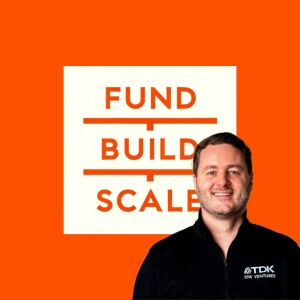
If you're building a first-to-market solution using emerging technology that could meaningfully contribute to society and generate a 50x return, TDK Ventures President Nicolas Sauvage wants to hear from you.
I invited him on the podcast to learn about TDK Ventures’ approach to corporate VC, which uses backcasting to identify ideal future technologies and then invest in entrepreneurs who are working towards those goals.
Portfolio companies include startups that make things like flying taxis, batteries from reclaimed materials and technology for nuclear fusion.
“There's no doubt in my mind that no one can forecast the future,” said Nicolas.
“But what we can do, all of us, is to dream of an ideal future, then backcast from there, and look at what are the gaps to get to this ideal future.”
Runtime: 43:31
Episode breakdown
4:50: “The origin story of TDK Ventures was three interactions in classes from a Stanford executive program in 2018.”
7:59: Nicolas explains TDK Ventures’ investment scope.
9:14: “No one can forecast the future,” which is where backcasting comes in.
11:39: “Right now, we deploy through two different funds.”
14:07: Inside TDK Ventures’ deal flow and investment thesis.
16:14: “For any megatrends, we're looking at $10B+ TAM. It could be zero TAM today.”
20:31: How do you calculate TAM for emerging technology?
22:17: When it comes to due diligence, “we are prepared. We know what to look for.”
25:23: Why he’s open to revisiting pitches he rejected once their technology matures.
29:59: Common misconceptions about corporate venture capital.
33:40: “How do we judge when is the right time? That really depends case by case.”
36:09: How TDK supports early-stage deep tech founders with academic backgrounds.
42:06: “I like to see entrepreneurs coming with a superpower; something that they're exceptional at that no one else is.”
Links
Nicolas Sauvage, president, TDK VenturesEntrepreneurship: A superhero’s journey
Corporate VC is booming, but is it what your startup needs?
TDK VenturesDeep Explorations
Autoflight
Ascend Elements
SPAN
Divirod
TypeOne Energy
Starship Technologies
AM Batteries
Metalenz
Jesper Sorenson, Senior Associate Dean for Academic Affairs, Stanford University Graduate School of Business
Ilya Strebuleav, professor, Stanford University Graduate School of BusinessThe Venture Mindset: How to Make Smarter Bets and Achieve Extraordinary Growth
Paul Holland, corporate venture practice managing director, Mach49
Thanks for listening!
– Walter.
fundbuildscale@gmail.com
Aug 22, 2024
Aug 22, 2024
36 min
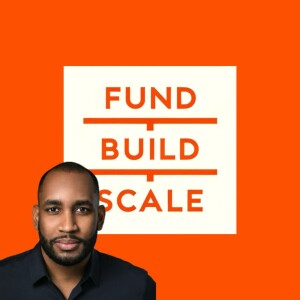
In this episode of Fund/Build/Scale, host Walter Thompson engages in a comprehensive discussion with Hantz Févry, co-founder and CEO of Stoovo, an AI-based geospatial data company.
Hantz shares invaluable insights into separating one's identity from their job, the importance of rapid execution in startups, and the journey from working at Google to launching his own company.
This episode targets tech workers aspiring to start their own businesses and immigrants in the U.S. on worker visas, highlighting the unique challenges and strategies for achieving entrepreneurial success. Hantz speaks on redefining success, Stoovo's pivotal evolution post-pandemic, and the critical importance of profitability and investment strategy.
Tune in to gain practical advice and inspiration for your startup journey.
Runtime: 36:23
Episode breakdown
2:26: “We realized that when it comes to the last hundred meters, there's a big gap.”
6:34: “I don't like to call it a pivot. I like to say that Stoovo evolved.”
8:35: “I do not think pivoting is a bad word. Actually, I think it's a sign of resilience.”
10:55: “By working together, it was very natural for the whole team to transition.”
15:07: “I was working at a company called Google, but I am Hantz, I'm not a Googler.”
17:10: “You might get there. You might not, but at least you were courageous enough to try.”
18:36: How Hantz defines work-life balance
22:20: Before he could launch Stoovo, “I had to wait until I had my green card.”
25:16: “I didn't have a uncle here, I do not have that famous garage where I can just sleep”
27:37: How Hantz and his co-founder Pierre connected with early investors
29:19: His framework for assessing founder-investor fit
33:38: Fundraising advice for Black and immigrant founders
34:32: Why “you don't need to be in Silicon Valley to build a business.”
Links
Hantz Fevry, CEO/co-founder, Stoovo
Stoovo (website)
Stoovo app (Google Play)
Stoovo app (Apple
500 Global
Le labyrinthe des égarés: L'Occident et ses adversaires, Amin Maalouf
Subscribe to Fund/Build/Scale
🎧 Apple Podcasts: https://podcasts.apple.com/us/podcast/fund-build-scale/id1719488387
🎧 Spotify: https://open.spotify.com/show/0EbC8PTUSfpZ4USPC9ErnN
Follow Fund/Build/Scale on LinkedIn
Thanks for listening!
– Walter.
fundbuildscale@gmail.com
Aug 4, 2024
Aug 4, 2024
44 min
Enterprise companies like Salesforce, Oracle and Cisco use sales-led growth to drive revenue and build relationships with potential customers.
Early-stage startups can't afford to rely on traditional sales and marketing, which is where product-led growth (PLG) comes in. Instead of creating slick sales collateral and hiring aggressive go-getters, PLG presents the product itself as the primary driver for customer acquisition, expansion and conversion.
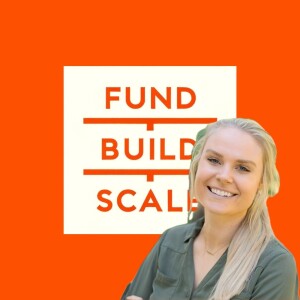
"It's an end-user-based revenue motion," said Laura Schaffer, VP of Growth at analytics platform Amplitude. "So you're trying to ultimately drive revenue growth by focusing on the end user."
I invited her on the podcast to talk about how founding teams with limited resources can build a robust PLG framework that gathers actionable data and drives engagement.
"If you think of payment, it's just a kind of friction. Just like completing a signup is friction. Just like learning a new product is friction," said Laura. "Payment and pricing and charging is just another friction."
Episode breakdown
Introduction to Laura Schaffer and her background in sales and growth
Defining Product-Led Growth (PLG) as an end-user based revenue motion
Key components of PLG: Acquisition, Monetization, Retention
Initial steps for startups adopting PLG with limited resources
“There are bad, high-friction questions, and then there's good questions.”
Identifying and prioritizing target personas based on user engagement
Minimizing bias by focusing on user problems and using quantitative data
Strategies for moving from freemium to paid versions based on engagement signals
Using free tools like Google Drive and Amplitude for tracking and data collection
Techniques for embedding personas into organizational culture for alignment
Avoiding vanity metrics and ensuring engagement metrics are linked to value
Laura’s advice on maintaining focus and prioritizing effectively for growth
Links
Laura Schaffer, VP Growth, Amplitude
Amplitude
Amplitude glossary of common terms
How to run painted door tests that don’t piss off your users, CommandBarElena’s Growth Scoop [Substack newsletter]
Product-led Geek [Ben Williams’ newsletter]
Follow Fund/Build/Scale on LinkedIn
Subscribe to FBS on Substack
Thanks for listening!
– Walter.

Aug 4, 2024
Aug 4, 2024
42 min
In this episode of Fund/Build/Scale, I interviewed Amex Ventures Managing Director Kevin Weber about some of the nuances between traditional VC and corporate venture capital.
It’s quite a mix: he’s looking for founders who can create value for individual American Express cardholders and the firm itself, so we talked about what types of opportunities he’s looking for, some of the problems he’s trying to solve, and the role risk plays in pushing organizational boundaries.
“In many cases, I actually want to take more risk in some of the investments that I'm going to make because that risk and the investment that I'm making for the potential opportunity that I could have to American Express is likely worth the bet,” he said.
If you’re interested in pitching Amex Ventures or another CVC, listen in for insights on fintech, AI, and e-commerce investments, the importance of aligning startup strategies with corporate goals, and key advice for first-time founders on fundraising and market positioning.
Episode summary
00:19 Meet Kevin Weber: Amex Ventures' Managing Director
00:42 The Role of Corporate Venture Capital
01:24 Kevin's Career Journey
02:53 Amex Ventures' Investment Strategy
03:06 Differences Between Corporate and Traditional VC
04:05 Strategic Value and Partnerships
05:30 Focus Areas and Portfolio Companies
07:49 AI and Machine Learning in Venture Capital
09:29 Investment Process and Founder Relationships
15:11 Turning Investments into Partnerships
20:23 Collaborating with Businesses to Achieve Goals
20:39 Addressing Pain Points and Future Trends
21:10 Focus on AI
22:23 Business Goals and Fraud Prevention
24:09 Investment Strategies and Pivots
25:37 Exit Strategies and Acquisition Policies
31:40 Working with Accelerators and Incubators
34:44 Advice for First-Time Founders
39:07 Risk Tolerance in Corporate Venture Capital
Links
Kevin Weber, Managing Director, Amex Ventures
Amex Ventures
Weber joins Amex Ventures, 6/12/2023, Global Corporate Venturing Leadership Society
Jobs at Amex Ventures
Goodie Nation
Follow Fund/Build/Scale on LinkedIn
Subscribe to FBS on Substack
Thanks for listening!
– Walter.

Jul 28, 2024
Jul 28, 2024
29 min
Everyone's looking for ways to implement AI solutions, but integrating them into existing systems means entering uncharted territory.
Despite the hype cycle, a majority of enterprise customers “are spending 70-80% of their capacity maintaining legacy application infrastructure,” said Jeremiah Stone, CTO of SnapLogic.
As a result, these companies often lack the necessary talent to effectively assess or integrate AI, making compliance and security the two biggest challenges for AI-first founders.
To overcome these and other adoption barriers, early-stage CEOs need to become educators and great listeners before they can ever act as salespeople.
In this episode, I interviewed Jeremiah to learn more about identifying and overcoming barriers to AI adoption, strategies for effective customer engagement and the importance of transparency and iterative experimentation in AI development.
Episode summary
Security and compliance “are the two things that are challenging for adoption right now.”
Before selling AI solutions, founders need to listen to (and educate) potential customers.
“Enterprises are spending 70-80% of their capacity maintaining legacy application infrastructure.”
The risk of data breaches and bad customer outcomes makes enterprises cautious.
Focus on solving unique problems AI can address better than existing solutions.
Build trust by starting discussions with security, compliance, and risk frameworks.
Innovate openly to demystify AI for customers.
Make sure your team is ready to answer typical security and compliance questions.
Maintain discipline in focusing on scalable solutions rather than niche problems.
“You have to create your own talent and upskill your data engineering team.”
“Experiment weekly on the things that look promising and treat it as an iterative process.”
Be transparent and involve customers early in your development process.
Links
Jeremiah Stone, CTO, SnapLogic
SnapLogic company overview
SnapLogic Names Jeremiah Stone CTO
Fund/Build/Scale on LinkedIn
Fund/Build/Scale on Substack
Thanks for listening!
-- Walter.

How to take an AI startup from idea to reality
The first episode of Fund/Build/Scale will be available in February 2024.
For transcripts, show updates and other exclusive content, follow “Fund/Build/Scale” on:
- Substack: https://fundbuildscale.substack.com
- LinkedIn: https://www.linkedin.com/groups/14341226
- YouTube: https://youtube.com/@FBSpodcast
- Eventbrite: http://fundbuildscale.eventbrite.com